
2025-01-20
Modern Portfolio Website - Next.js & Docker Deployment
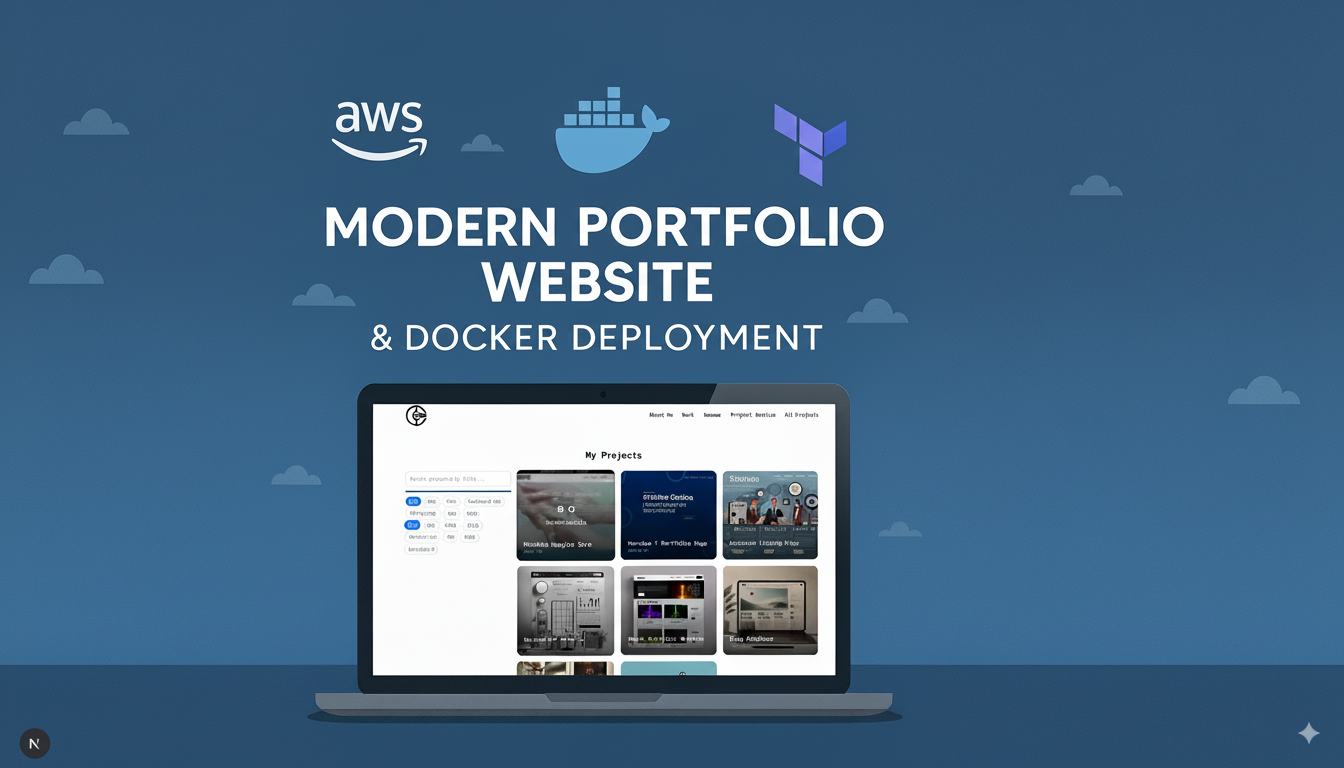
A modern portfolio website built with Next.js, featuring containerized deployment with Docker and Infrastructure as Code using Terraform for AWS/Digital Ocean environments.
Project Overview
This portfolio website represents a modern approach to web development and deployment, combining Next.js for the frontend with containerized deployment strategies and Infrastructure as Code principles.
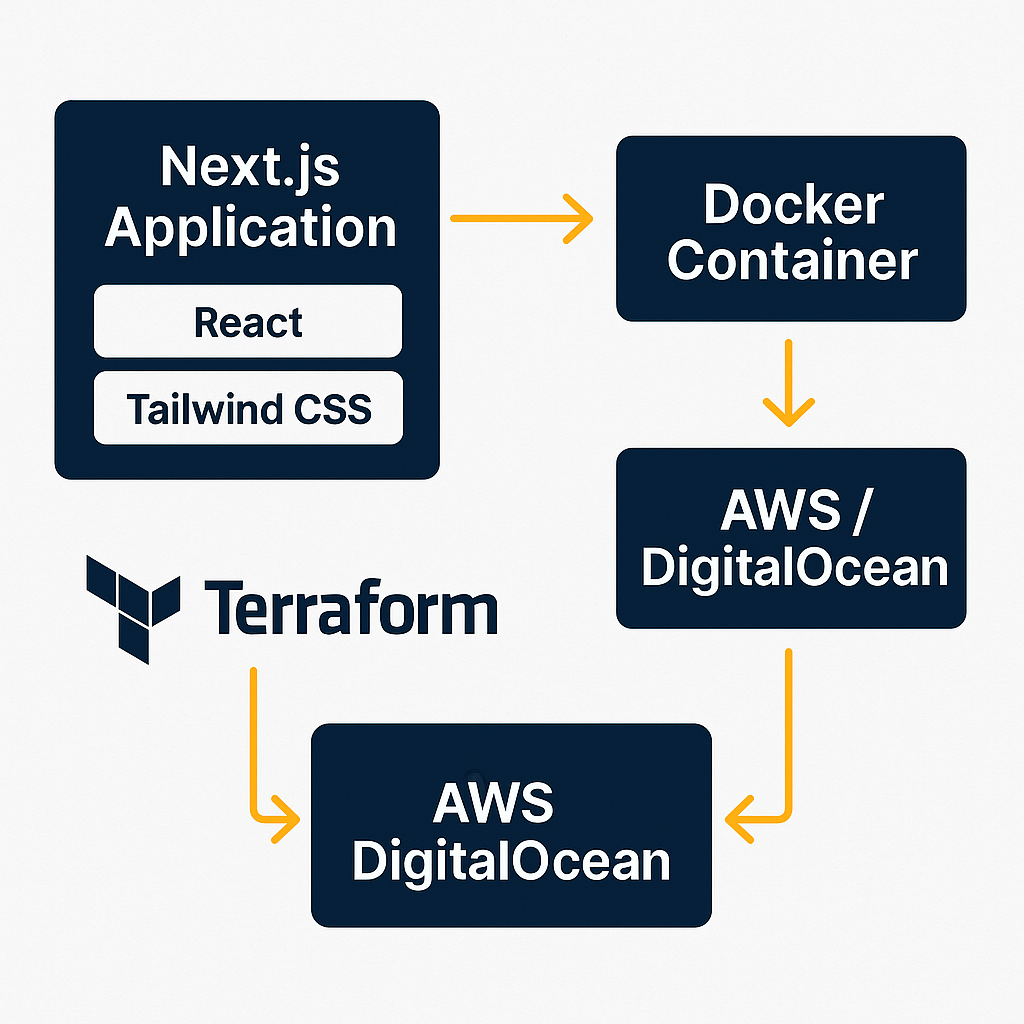
The project showcases a complete DevOps workflow, from development to production deployment across multiple cloud providers including AWS EC2 and Digital Ocean.
Tech Stack & Architecture
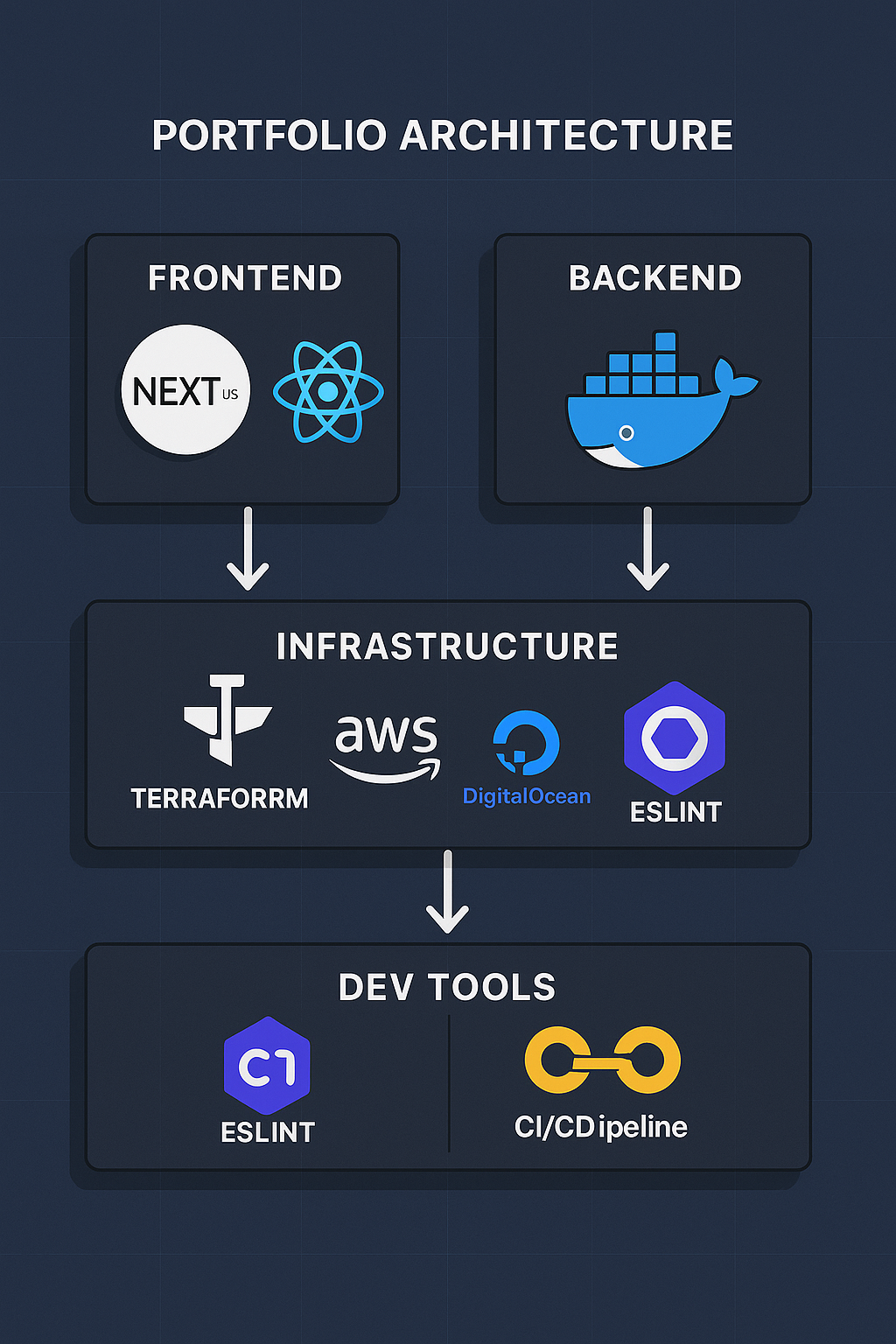
Frontend: Next.js 14, React 18, Tailwind CSS for responsive design and modern UI components.
Deployment: Docker containers for consistent environments, with separate configurations for development and production.
Infrastructure: Terraform for Infrastructure as Code, supporting deployment to AWS EC2 and Digital Ocean droplets.
Development Tools: ESLint, Prettier, and automated CI/CD pipelines for code quality and deployment automation.
Infrastructure as Code
Utilized Terraform to manage cloud infrastructure, providing:
- Reproducible infrastructure deployments
- Version-controlled infrastructure changes
- Support for multiple cloud providers (AWS, Digital Ocean)
- Automated provisioning of compute resources, networking, and security groups
The Terraform configuration includes modules for different environments, making it easy to spin up development, staging, and production environments.
Development Workflow
Established a comprehensive development workflow that includes:
- Local development with Docker Compose for consistent environments
- Automated testing and linting in CI/CD pipeline
- Infrastructure validation and planning before deployment
- Blue-green deployments for zero-downtime updates
This approach ensures code quality, reduces deployment risks, and maintains high availability.
Deployment Strategy
The deployment strategy supports multiple cloud providers and environments:
- AWS EC2: Utilizing EC2 instances with Auto Scaling Groups and Application Load Balancers
- Digital Ocean: Droplets with managed databases and CDN integration
- Environment Management: Separate dev and prod environments with different resource allocations
Each environment is configured through Terraform variables, making it simple to deploy to different providers or regions.
Key Features
- Responsive design optimized for all device sizes
- Dynamic project showcase with detailed case studies
- Performance-optimized with Next.js Image component and lazy loading
- SEO-friendly with proper meta tags and structured data
- Containerized deployment for consistency and scalability
- Infrastructure as Code for reproducible deployments
- Multi-environment support (dev, staging, production)
Challenges & Solutions
Challenge: Managing different configurations across multiple environments and cloud providers.
Solution: Implemented Terraform modules with environment-specific variables and Docker multi-stage builds to handle different deployment scenarios efficiently.
Challenge: Ensuring consistent performance across different cloud providers.
Solution: Standardized container configurations and implemented monitoring and alerting to track performance metrics across all environments.
Future Enhancements
- Implementation of Kubernetes for container orchestration
- Integration with CI/CD platforms like GitHub Actions or GitLab CI
- Addition of monitoring and logging solutions (Prometheus, Grafana)
- Implementation of automated security scanning in the deployment pipeline
- Integration with Content Delivery Networks for improved global performance